
Originally Posted On: https://ikippahs.com/blogs/jewish-style/a-step-by-step-guide-to-caring-for-a-formal-kippah-between-events
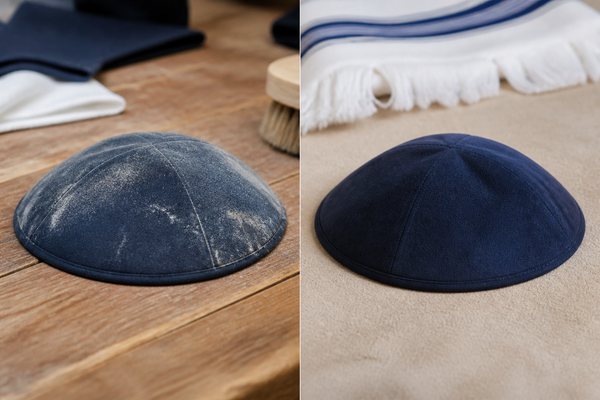
What You'll Need
Before you tuck that velvet or suede kippah away after the wedding or bar mitzvah, gather a few basics. Takes about 5-10 minutes, no special skills required.
-
Soft-bristle brush (a suede brush or clean toothbrush works fine)
-
Dry microfiber cloth for blotting fresh spots
-
Mild fabric cleaner matched to the material — separate ones for suede, leather, and velvet if you've got a mixed collection
-
Small bowl or rounded object to reshape a dome-style kippah while it dries
-
Soft pouch, small box, or garment bag for storage
-
Tissue paper to separate patterned pieces so dye doesn't bleed between them
-
A dry, flat, shaded spot — a drawer or shelf away from heat vents and direct sun
-
A few minutes right after the event — don't wait until the night before the next simcha
That velvet dome sitting in the top drawer for eight months between the last bar mitzvah — the next one? It's picking up dust, losing its shape, and quietly falling apart while nobody's watching. A formal kippah takes a beating at weddings and bar mitzvahs — sweat, hairspray, kiddush lunch, the works — and most parents never think about it again until the next invitation shows up.
Here's the thing: velvet, suede, and leather aren't like the cotton or knit kippah your son wears to school. They hold onto dust, they crush under weight, and they stain if you wait too long to deal with it. Five minutes of care after each event is the difference between a kippah that looks sharp for years and one that needs replacing before his next simcha. Below is exactly what to do, step by step, so it's ready every single time.
What You'll Need Before You Start Caring for a Formal Kippah
Picture this: the bar mitzvah ends— that velvet piece gets tossed in a jacket pocket for three months until the next wedding invite shows up wrinkled and dusty. That's how most formal kippahs get ruined. A Formal kippah made from velvet, suede, leather, or satin-trimmed fabric takes more of a beating at events than a daily cotton or knit style — sweat, hairspray, and tight bobby pin clips all add up fast. Before your next event, grab a small kit: a soft-bristle brush, a garment bag, tissue paper for shaping, a secure clip or pin, and a cedar block to keep moisture and odor away. Getting the fit right matters too — check formal kippah sizing before the season starts so you're not scrambling last minute.
Why Material Matters (Velvet vs. Suede vs. Leather)
Velvet crushes easily and needs gentle brushing. Suede stains if it gets wet — never rub. Leather holds shape best but scuffs.
Setting Up a Dedicated Storage Spot
Pick a flat drawer, small box, or hook away from direct sunlight and moisture.
Step 1: Brush Off Dust and Debris Right After the Event
Do this the second your son walks through the door. Velvet and suede hold onto dust like a magnet, and once that grit works into the nap, it dulls the color fast. Grab a soft-bristle brush — the kind used for suede shoes works fine — and brush against the nap first, then smooth it back down. This lifts crumbs, confetti, and hair before they mat into the fibers. For any formal kippah, this five-minute habit is the whole game. It's especially true for a Personalized Formal Yarmulke, since custom stitching and embroidery show wear faster than plain fabric.
Common Mistake: Skipping This Step
Skip it, and dust sits for weeks. The fibers flatten, matting sets in, and the color goes flat and gray-ish under light. By the next wedding or bar mitzvah, you're stuck buying new instead of just brushing. Good formal occasion yarmulke styling starts with maintenance, not shopping. Five minutes now beats replacement later.
Step 2: Spot-Treat Stains Before They Set
What's that mark on the brim — kiddush wine or a lipstick smudge from a hug at the reception? Blot first with a dry cloth, never rub. Rubbing pushes the stain deeper into the fibers, and that's how a small spot turns into a permanent shadow. Once the excess is lifted, use a mild cleaner made for the exact material you're working with. A Suiting Yarmulke handles a gentle solvent fine, but leather and velvet don't forgive soaking — ever.
Testing Cleaner on a Hidden Spot First
Dab any product on the inside rim before it touches the visible top. Some formal kippah fabrics react to solvents with discoloration you won't notice until it's too late.
When to Skip DIY and Use a Professional Cleaner
Crocodile leather or embroidered pieces with Hebrew lettering aren't a home project. A professional cleaner protects the stitching and keeps the pattern intact.
Step 3: Reshape and Let It Air Dry Completely
Nine out of ten shape complaints trace back to one thing: skipping this step. A crumpled dome doesn't bounce back on its own — it needs a hand.
Once your kippah is clean and damp, work it gently back into its original curve. For a domed style, drape it over a small bowl or a rounded glass. For flat styles, lay it face-up on a towel and smooth the edges flat. Don't rush this part. A Suiting kippah, like the Suiting kippah, holds its structure well once reshaped, but it still needs time away from heat vents, radiators, or direct sun to set properly.
Air dry it flat or on its form for 12 to 24 hours. Skip the hair dryer — heat warps fabric fast and shortens the life of any well-made yarmulke.
Step 4: Store It Properly Until the Next Simcha
Most people assume any drawer will do. That's wrong, and it's why velvet domes show up flattened at the next bar mitzvah. A soft pouch or small box keeps the shape intact and protects it from dust. Leave clips attached but don't bend them against the fabric — bent metal creates a crease that never fully disappears. Store patterned pieces (Aleph Beit, plaid, Israel-themed) separately, too, since dye from one can bleed onto another during humid months. A formal suiting kippah like the formal suiting kippah holds up especially well when boxed flat rather than folded.
Rotating Your Collection So One Kippah Doesn't Wear Out
If your son owns three or four, rotate them. Wearing the same velvet dome to every wedding — every simcha wears down the nap fast. Rotation keeps each piece looking fresh and stretches its life for years, not months.
Common Mistakes to Avoid When Maintaining a Formal Kippah
Picture this: a father grabs the iron five minutes before candle-lighting and presses it straight onto black velvet — and now there's a shiny flat patch that won't brush out. That's mistake number one. Here's a tight list of the slip-ups that shorten the life of a formal kippah for weddings, the kind families buy from a formal kippah for weddings collection and expect to reuse for years:
-
Ironing velvet directly instead of steaming it from a few inches away.
-
Machine washing suede, which strips the nap and warps the shape.
-
Leaving it clipped to a yarmulke clip on the dash of a hot car — heat melts the backing glue.
-
Letting kids toss it loose in a backpack between school and a party.
-
Skipping a quick check of the rim stitching before a big event — loose threads only get worse mid-photo.
How to Check Your Formal Kippah Is Ready for the Next Event
Don't just toss it back in the drawer and hope for the best. Before storing your kippah for good, run through a quick four-point check: no dust or lint clinging to the fabric, the shape still holds its curve, the clip sits tight and doesn't wobble, and there's no lingering odor from cologne or sweat. Skip any of these, and you'll open the box next time to a flattened, musty mess.
Parents often ask is a kippah appropriate for formal occasions — and the honest answer is yes, provided it's kept in good shape between weddings and bar mitzvahs. A well-kept velvet or suede piece can realistically get your son through several years of simchas without needing a replacement. That's not marketing fluff — it's just what happens when you actually store the thing right instead of shoving it in a coat pocket.
How-To FAQ
What are the different types of kippah?
Kippahs come in a handful of core styles: knit, cotton, velvet, suede, leather, and satin-trimmed. Knit and cotton are everyday, casual picks. Velvet and suede lean formal — think bar mitzvahs and weddings — while leather and satin trims show up on custom or wedding-specific pieces. Pattern choices (plaid, Aleph Beit, Israel-themed) exist across most of these materials, so the fabric matters more than the print when you're deciding how to care for it.
Is there a difference between a yarmulke and a kippah?
Not really — they're the same head covering, just different words for it. Kippah is the Hebrew term; yarmulke comes from Yiddish. You'll hear both used interchangeably, and the pronunciation (kee-PAH vs. YAH-muh-kuh) usually depends on someone's background rather than any real difference in the item itself.
Can a kippah be worn every day, or only for formal events?
A kippah can absolutely be worn every day — formal ones just aren't built for that kind of wear. Daily options like cotton or knit hold up fine to constant use and washing. A velvet or suede formal kippah, on the other hand, wears out fast if it's doing daily duty instead of sitting in storage between simchas. That's the whole reason for a rotation and care routine in the first place.
How long should cleaning or spot-treating a formal kippah take?
Brushing and spot-treating a formal kippah takes about five to ten minutes if you do it right after the event. Waiting even a week or two means dust sets into the nap, and stains get harder to lift, which turns a quick five-minute job into a much longer one — or one that needs a professional cleaner instead.
Is it safe to iron or steam a velvet or suede kippah?
No — direct heat is one of the fastest ways to ruin a formal kippah. Ironing crushes velvet's nap permanently and can warp suede or leather trim. If a kippah looks flat or wrinkled, reshape it by hand over a rounded bowl and let it air dry instead. Steam from a distance is sometimes okay for velvet, but test on a hidden spot first.
How much does a formal kippah typically cost, and does that affect how I should care for it?
Formal kippahs vary in cost based on material and customization, and pricier fabrics generally need more careful handling. A basic cotton or knit yarmulke is fairly low-maintenance and forgiving. Leather, suede, and embroidered velvet pieces cost more and need the brush-clean-store routine every single time, since these materials show wear (and lose resale-level appearance) much faster when neglected.
Five minutes of brushing, a proper dry, — a dedicated storage spot — that's really the whole system. Nothing complicated. A formal kippah doesn't need constant attention; it needs consistent attention, and there's a real difference between the two. Skip the brush after one simcha, and it's fine. Skip it after six, and the velvet nap starts matting for good.
Parents who rotate two or three kippahs between bar mitzvahs and weddings get years out of each one instead of months out of one overworked piece. And that hidden-spot cleaner test? Do it every single time, even when you're rushing out the door for the next event. It takes ten seconds and saves a $20 velvet dome from a bleach stain that never comes out.
Before the next invitation shows up, run through the checklist one more time — shape, clip, stitching, smell. If the current one's finally worn through, browse iKIPPAHS.com for a fresh formal kippah built to handle the same routine, and start the care habit over from day one.


