

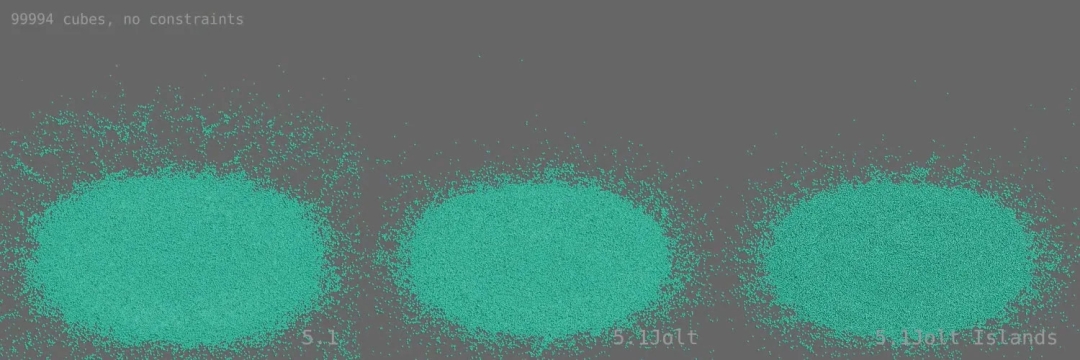
NICOSIA, Cyprus – Nov. 25, 2026 – RetroStyle Games, a game art outsourcing studio, published a case study of destruction simulation for mobile game video ads: how a faster physics engine inside Blender lets its artists simulate a whole world of blocks falling apart. In a clean test scene of 99,994 cubes and 250 frames, the studio’s Blender build finished the simulation in 20 minutes, compared with 3 hours 30 minutes in standard Blender 5.1.
The case study, published on November 24, 2026 on the studio’s blog, started with a client request. A mobile game ad needed a world of blocks that breaks apart on screen, the kind of simulated destruction used as the opening hook of mobile game ads, where a hole swallows a block world piece by piece. Past a few dozen thousand pieces the studio’s first tries in standard Blender crawled, and every small change meant a long wait. That left time for only a handful of versions of the key moment.
A 3D artist of the studio replaced the standard Blender physics with Jolt, an open-source physics engine of the kind games use to make objects fall, collide and break. Artists keep working in Blender, the 3D tool they already know. AI helped write the code and assemble the tool around the engine, which does the heavy lifting. The artist packaged the result as JoltMesh, which treats thousands of blocks as one object.
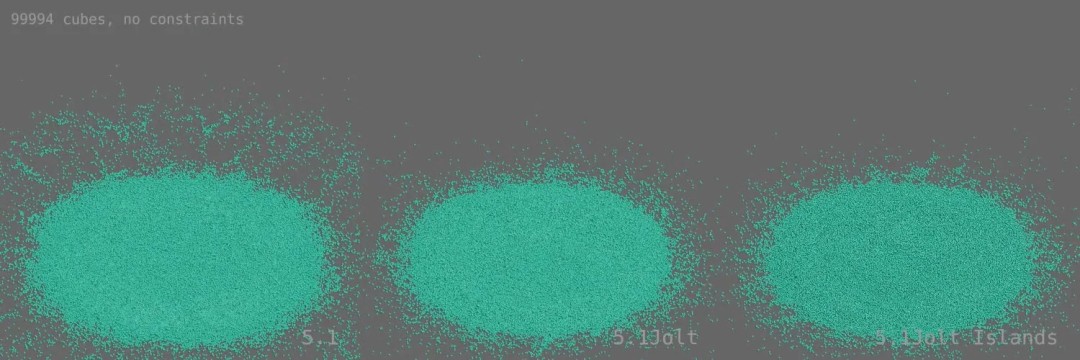
The studio measured the result on one computer, an Intel i7-13700F with 64 GB of memory, with the same scene in standard Blender 5.1 and in its own build: an egg of 99,994 cubes simulated over 250 frames. Standard Blender needed 3 hours 30 minutes. The studio’s build needed 22 minutes with every cube as a separate object and 20 minutes with all cubes inside one object, an increase in speed of more than ten times. Memory during the simulation dropped from 22 GB to 2.9 GB, and the viewport played the baked scene at 43 frames per second instead of 2.
The scene is a clean test egg. Production scenes are heavier and still take hours in both tools. What changes is how many pieces can be simulated and how smoothly artists can work with them, which leaves more room for versions of the key moment before a deadline.
Speed is only half of the result. The case also describes five setups that help a simulation look the way an ad hook needs it. Wake on contact keeps a city frozen and free to calculate until a moving zone reaches it. Chunks glue pieces together so walls break off in large parts first and then crumble instead of turning into sand. Scale keeps thousands of pieces inside a few objects, so a huge scene stays light to work with. Real shapes give rings, hearts and stars colliders that follow their form, so they hook and tangle like real ones. Water lets pieces float, rock and drift on waves and break up the ice around them.
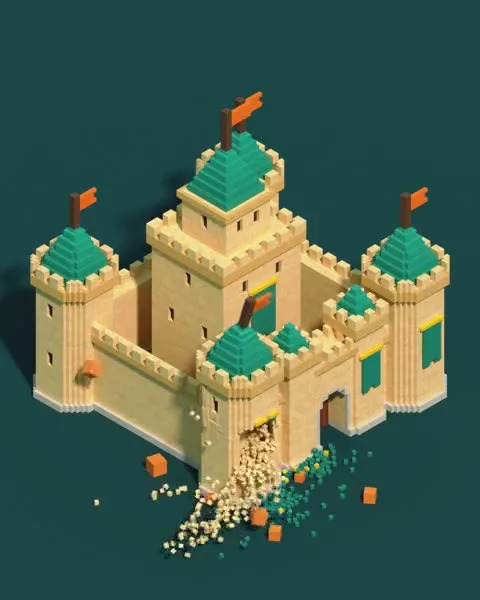
For clients, the studio turns this into finished creatives: a game’s levels, characters and props rebuilt as pieces that can fall apart, real physics on every piece, more takes of the key moment, and rendered videos cut, sized and ready to upload to ad networks. The studio also tested the same scenes in 3ds Max with the free tyFlow plugin and found Blender with its own engine the easier route for this project.
The full case study, with the test charts, the five setups and the comparison, is available at https://retrostylegames.com/blog/voxel-destruction-14x-faster-with-ai-case-study/?utm_source=prnow&utm_medium=press_release&utm_campaign=voxel_destruction
About RetroStyle Games
RetroStyle Games is a game art outsourcing studio providing 2D and 3D game art design for game studios and publishers. More information: https://retrostylegames.com/?utm_source=prnow&utm_medium=press_release&utm_campaign=voxel_destruction&utm_content=about
Media Contact
Company Name: RetroStyle Games
Contact Person: Mykola Vynohradov
Email: Send Email
Phone: +380732503090
City: Nicosia
Country: Cyprus
Website: https://retrostylegames.com/