JIEYANG, GUANGDONG, CHINA, November 27, 2026 /EINPresswire.com/ — Across different cultures and human ethnicities, facial hair characteristics vary significantly, driving unique personal care practices and grooming expectations. In the Middle East, high density and rapid growth of coarse facial hair make routine maintenance an essential aspect of everyday personal presentation and hygiene. Among these tools, the electric nose hair trimmer plays an increasingly essential role in modern daily maintenance. As a leading High Quality Nose Hair Trimmer Solutions Provider, KUCHIE develops compact personal care appliances engineered for precision, hygiene, and skin safety. Modern nose hair trimmers are designed to deliver safe, painless micro-trimming without pulling or irritating sensitive nasal membranes, offering a reliable, ergonomic alternative to traditional grooming methods.
Market Dynamics and Evolving Grooming Expectations in the Middle East
The personal grooming landscape across the Middle East is undergoing significant expansion, driven by rising disposable income, urbanization, and heightened awareness of professional appearance. Consumers in regions such as the Gulf Cooperation Council (GCC) prioritize refined grooming standards. However, local climatic conditions present distinct challenges. The regional combination of arid desert air, extreme seasonal heat, ambient airborne dust, and high usage of air conditioning creates heightened skin sensitivity and dry nasal passages.
Consequently, traditional blade contact or aggressive mechanical trimmers frequently cause micro-abrasions, inflammation, or ingrown hairs. This environment has generated a sharp surge in demand for personal care appliances specifically built around hypoallergenic materials, precision engineering, and ergonomic handling to suit demanding local physical conditions.
Technical Analysis of B2B Procurement Pitfalls in Personal Care Tools
For commercial buyers, brand owners, and importers targeting Middle Eastern retail channels, sourcing personal care appliances involves navigating significant product liability and operational risks. Analysis of market feedback highlights three common procurement failure scenarios, each directly tied to specific engineering decisions made at the manufacturing level.
1. Post-Purchase Blade Corrosion and Bacterial Accumulation
A major source of consumer returns stems from rapid oxidation of inner cutting heads and hygienic deterioration. In high-humidity bathroom environments or through direct contact with cleansing liquids, sub-standard steel grades corrode rapidly.
Engineering Resolution: The technical cause lies in the usage of low-cost carbon steel alloys lacking sufficient chromium content or improper passivation treatments. Professional solution providers address this by utilizing medical-grade, hypoallergenic stainless steel for all blade assemblies, paired with precise electrochemical polishing that prevents bacterial adhesion and resists ambient moisture corrosion.
2. Painful Hair Pulling and Engine Stalling Under Heavy Use
Users frequently complain about painful pulling rather than clean cutting, particularly when trimming thicker hair strands characteristic of Middle Eastern demographics.
Engineering Resolution: This defect occurs when manufacturers pair low-torque DC motors with loose mechanical tolerances between the rotating inner blade and outer stationary foil. Under load, blade rotational velocity drops precipitously. Resolving this issue requires high-rpm micro-motors with dynamic torque control, combined with ultra-tight tolerance machining (under 0.02 mm clearances) to ensure clean shearing without snagging.
3. Rapid Battery Degradation and Thermal Management Failures
Commercial buyers often encounter high defect rates related to power failure, short battery lifespans, or excessive thermal generation during operation in high ambient temperatures.
Engineering Resolution: This stems from lower-grade battery chemistries lacking integrated printed circuit board (PCB) protection modules against overcharging, current spikes, and thermal runaway. Engineering high-reliability devices requires certified lithium-ion cells integrated with intelligent power management circuits that stabilize current delivery and restrict temperature rise during extended use.
Product Engineering Highlight: Model B-1 Micro-Trimmer Case Study
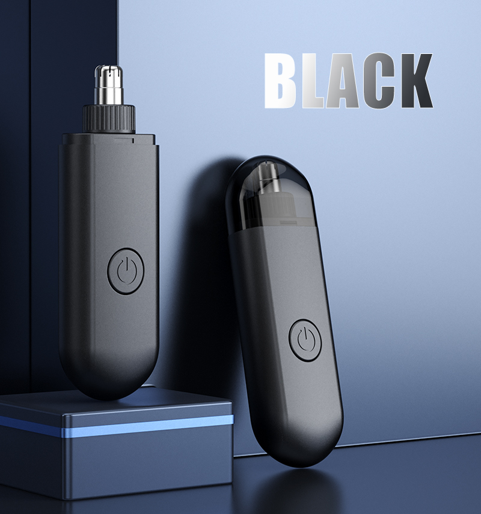
To meet these demanding market specifications, KUCHIE’s flagship Model B-1 demonstrates how precise engineering addresses regional consumer requirements. Designed as a versatile, ultra-compact grooming solution, the Model B-1 balances portability with robust operational output.
Specifications and Technical Profile
Model Identifier: B-1 Nose Hair Trimmer Series
Dimensions and Form Factor: 9 cm x 3 cm x 2 cm; highly portable ergonomic housing
Weight Parameters: Net weight of 0.032 kg; gross unit weight of 0.063 kg
Packaging Architecture: Individual box size of 10.9 cm x 3.9 cm x 7 cm; standard export carton dimensions of 41 cm x 36 cm x 23.3 cm accommodating 100 units per master carton (total carton weight 7.3 kg)
Color Configurations: Available in classic Black, vibrant Orange, and modern Blue finishes
The Model B-1 incorporates a rounded hypoallergenic outer guard casing that insulates sensitive nasal tissue from direct blade contact while guiding hair effortlessly into the cutting zone. Its lightweight profile-weighing just 32 grams-makes it ideal for daily home use as well as travel, without compromising motor speed or cutting efficiency.
Integrated Manufacturing and Quality Assurance Framework
Delivering consistent product standards across global markets requires end-to-end control over the production supply chain. KUCHIE operates an integrated manufacturing structure encompassing original design, independent research and development, and large-scale assembly line operations.
Structured Operational Capacity
Workforce Structure: Operational stability is maintained by two senior directors overseeing facility management, three dedicated workshop supervisors monitoring assembly quality, a specialized three-person R&D innovation team, 120 skilled frontline assembly operators, and ten logistics staff managing raw material and finished goods inventory.
Production Volume: The facility achieves a consistent daily output of 8,000 units, supporting annual sales volumes between $20 million and $30 million USD across international distribution channels.
Category Versatility: Beyond nose hair trimmers, the production line encompasses small grooming and hair care appliances, including professional hair dryers, straighteners, curling irons, electric shavers, and lifestyle accessories such as milk frothers.
Strict quality inspection protocols are integrated at every stage, from incoming raw material verification (IQC) and motor performance calibration to finished-goods drop tests and waterproof seal validation, ensuring low return rates for retail partners.
Strategic Procurement Solutions for Middle East Importers
For regional distributors seeking to launch customized grooming lines tailored to Middle Eastern skin sensitivity and hair density requirements, off-the-shelf products often fall short of compliance and performance standards. Partnering with a specialized original design manufacturer (ODM/OEM) provides access to customizable blade materials, specialized exterior coatings, and optimized packaging configurations designed to withstand local logistics conditions.
For technical specifications, customized OEM packaging options, and bulk procurement inquiries regarding the B-1 Series and full grooming appliance portfolio, visit the official enterprise portal at www.kuchite.com
KUCHITE
KUCHITE
email us here
Legal Disclaimer:
EIN Presswire provides this news content “as is” without warranty of any kind. We do not accept any responsibility or liability
for the accuracy, content, images, videos, licenses, completeness, legality, or reliability of the information contained in this
article. If you have any complaints or copyright issues related to this article, kindly contact the author above.

Media gallery