
CHARLOTTE, NC – X-Sense highlights the growing need for whole-home protection as fire behavior in modern households becomes increasingly unpredictable.
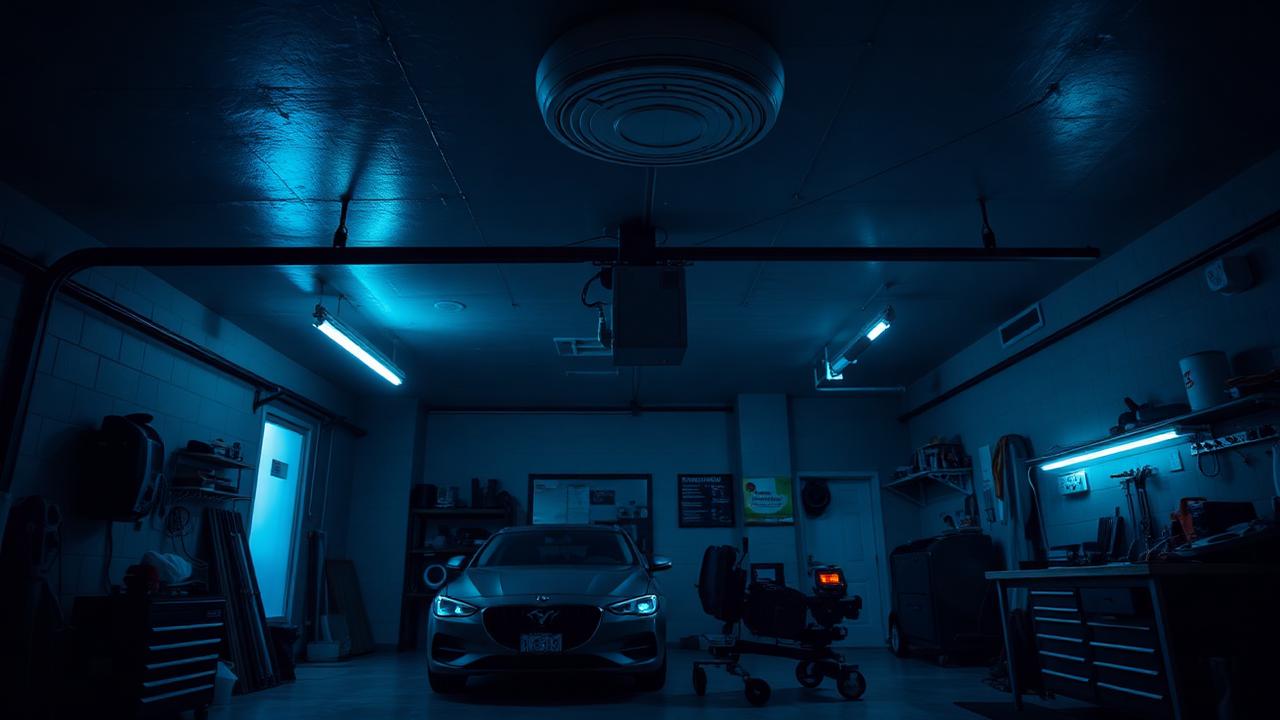
Most people have a garage smoke alarm and think their home is protected by it. Logically it makes sense — bedrooms and hallways are where smoke alarms are effective, so the garage seems like another extension. However, garages are a special type of space, and smoke alarms are usually not an appropriate fit for them.
The False Alarm Problem
A smoke alarm “sees” the smoke particles in the air. That’s fine for a living room or bedroom. It’s another issue altogether in a garage. Smoke alarms go off often because of car exhaust when you start the engine, spray paint fumes, sawdust on a workbench, or fumes from a nearby lawnmower. None of those are fires. The alarm doesn’t know that, and it goes off anyway.
Most people tolerate this for a while, then disconnect the battery. The alarm stays on the wall and looks like it’s working, yet it provides no security. That’s a greater safety risk than people think.
Why Heat Alarms Work Better Here
A heat alarm does not react to particles or gases. It reads the air temperature. When the room reaches a set threshold, typically between 130°F and 150°F, it triggers. Below that, it stays quiet no matter what you are doing in the space.
Starting a car engine and letting it idle briefly does not push the whole garage to dangerous temperatures. Spray painting does not either. An actual fire does, and quickly. That is the only condition a heat alarm responds to, which makes it far more appropriate for a garage where normal activity constantly produces fumes and dust.
A 10-year sealed battery matters in a garage specifically because it is an out-of-sight space that rarely gets checked. The X-SENSE XH02-M heat detector fits that use case well — it uses an NTC thermistor, triggers between 129°F and 149°F, and the sealed battery runs the full decade without replacement. It works standalone or connects to the SBS50 base station if you want it integrated with the rest of your home’s alarms.
What Building Codes Say
NFPA 72, the standard most US local fire codes follow, does not require smoke alarms inside garages. The nuisance alarm issue is well documented, and the standard accounts for it. In attached garages or spaces with fuel-burning appliances, codes more commonly point toward heat detection rather than smoke. That does not mean the garage needs no protection — it means the right type of protection is different from what most people default to.
Carbon Monoxide Is a Separate Risk
CO is a silent killer; it cannot be detected by either smoke alarms or heat alarms. CO is produced when cars, gas heaters, generators, or boilers turn on. It is without scent or color, and levels can build high before symptoms are recognized.
In an attached garage, CO does not stay put. It can penetrate cracks around internal doors, even when the door is closed, and enter the home. A separate CO alarm covers this and should be treated as its own requirement rather than something covered by existing smoke detection. For homeowners who want a single device handling both fire and CO risks, an X-SENSE combined detector is an ideal choice, detecting smoke and CO in one unit.
The Broader Point
Smoke alarms belong in bedrooms, hallways, and main living areas. That is where they perform well and where early smoke detection genuinely matters. In a garage, the same detector that could wake you up in time during a house fire will also go off when you start the mower — and after enough of those, it will have no battery in it.
Heat detection handles the actual fire risk in a garage without the constant false triggers. CO protection handles the gas risk that neither a smoke alarm nor a heat alarm touches. Those two together cover what a garage actually needs. Getting this right is not complicated. It mostly just requires knowing that the smoke alarm in the hallway and the right detector for the garage are not the same device.
About X-SENSE Innovations
Founded in 2013, X-SENSE Innovations operates from its registered U.S. address at X-SENSE USA LLC, 1209 Orange St, Wilmington, DE 19801, and specializes in developing certified home fire and safety solutions for both residential and commercial environments. The company focuses on producing professional and user-friendly safety devices, including domestic fire alarms such as smoke, carbon monoxide, and heat alarms, as well as smart home safety systems covering fire protection, intrusion detection, and indoor environment monitoring.
More information is available at www.x-sense.com.
Official company social media profiles: Facebook and Instagram.
Media Detail
Contact Person Name: Farrukh
Company Name: X-Sense
Email: service@x-sense.com
Website: https://www.x-sense.com/
Phone: +1 (833) 952-1880


