
Key Takeaways
- Sleeping flat may actually work against the body’s natural processes, including digestion, circulation, and breathing.
- Elevating the head of the bed just 3-8 inches uses gravity to help reduce acid reflux, snoring, and mild sleep apnea symptoms — and may complement or reduce the need for medication in mild to moderate cases, though it is not a replacement for prescribed treatments.
- A full-body incline is very different from stacking pillows — and the distinction matters more than most people realize.
- The American College of Gastroenterology and the American Gastroenterological Association consistently recommend head-of-bed elevation for patients with nocturnal GERD symptoms.
- Keep reading to find out why the angle of your incline may be the most important factor in getting real results.
Most people spend years chasing the perfect mattress, the right pillow, or the ideal sleep schedule — without ever questioning the most fundamental variable: the angle at which the body lies. What if the flat sleeping position, accepted as the default for generations, is quietly undermining health night after night? The answer, backed by both historical practice and modern research, might be as simple as a few inches of elevation.
Inclined Sleep vs. Flat Sleep: Key Differences at a Glance
Factor Flat Sleep Inclined Sleep (3-8 inches) Acid Reflux / GERD No gravitational barrier; acid moves freely Gravity keeps acid in the stomach Venous Return No gravitational assist from lower body Gravity supports blood flow back to the heart Sinus Drainage Fluid pools in nasal passages Gravity encourages passive drainage Snoring Tissues fall backward, narrowing airway Head elevation reduces tissue collapse Lymphatic Flow Gravity-neutral; drainage less efficient Gentle slope supports lymphatic movement Spinal Alignment Neutral for most positions Maintained with full-body incline; at risk with pillows only
The contrast becomes clearest not in theory, but in lived experience. People who switch from flat sleeping to a properly inclined position frequently report noticing a change within the first few nights — less morning heartburn, clearer breathing, fewer trips to the bathroom, reduced puffiness. These aren’t placebo effects; they’re predictable outcomes of giving the body’s gravitational systems a chance to work during sleep.
Sleeping Flat May Be Working Against Your Body
Flat sleeping feels intuitive. Beds are flat, floors are flat, and the idea of lying horizontally during rest seems like the most natural thing in the world. But the human body isn’t a static object — it’s a system of continuous processes: circulation, digestion, lymphatic drainage, and respiration. All of these systems are affected by gravity, and lying completely flat removes gravity’s ability to assist them.
When the body is horizontal, stomach acid has no gravitational barrier keeping it in place. The tongue and soft palate are more likely to fall backward and narrow the airway. Blood returning from the lower extremities to the heart has to work without any gravitational assist. Sinus fluids that would otherwise drain can pool, leading to congestion and disrupted breathing.
These aren’t fringe concerns. They are well-documented physiological realities that help explain why so many people wake up with heartburn, a stuffy nose, or feeling unrested despite a full night in bed. The problem, in many cases, isn’t how long a person sleeps — it’s how they’re positioned while doing it.
What Inclined Sleeping Actually Means
The 3-8 Inch Elevation Sweet Spot
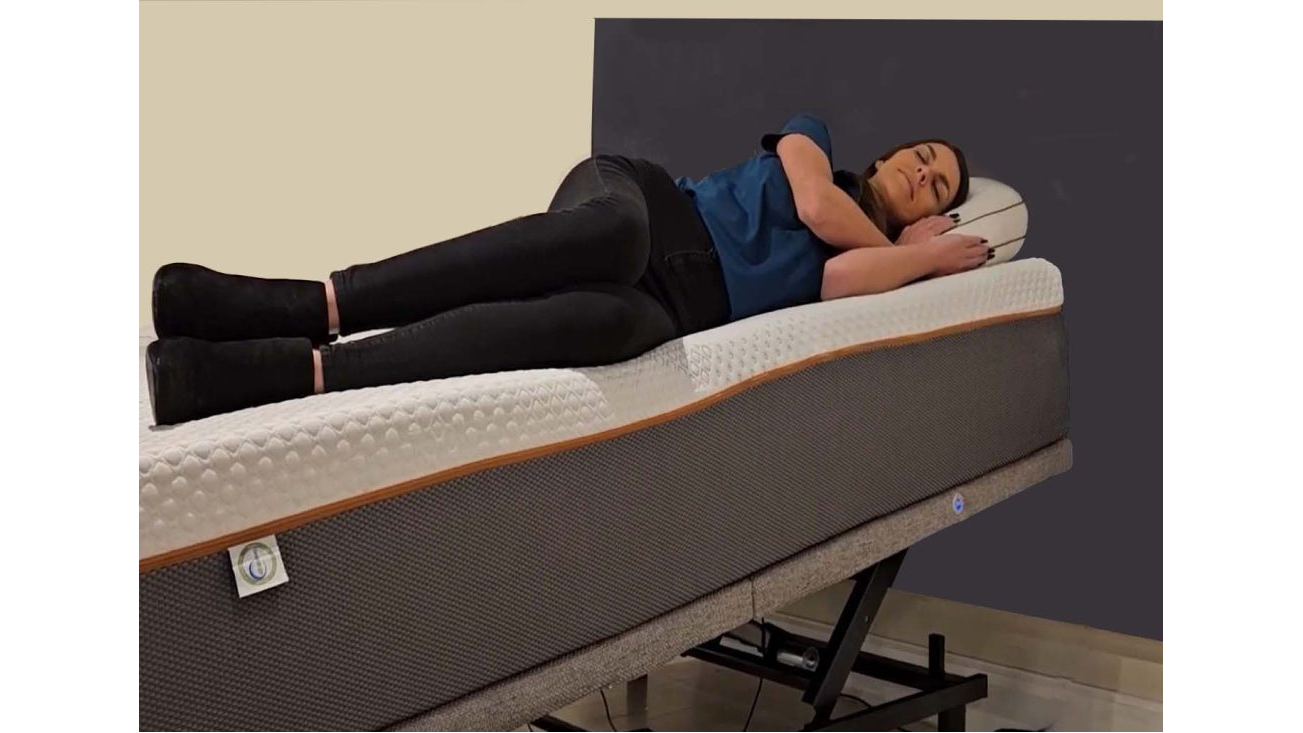
Inclined sleeping is not the same as propping up with extra pillows or sleeping in a recliner. It refers specifically to elevating the head of the entire bed so the body rests on a consistent, gentle downward slope from head to feet. The range that practitioners and researchers have identified sits between 3 and 8 inches of elevation at the head — subtle enough to sleep comfortably in any position, yet significant enough to produce measurable physiological benefits.
For therapeutic purposes — particularly acid reflux and GERD — the more widely cited recommendation is 6-8 inches of elevation, which corresponds to a steeper angle than many people expect. This is enough incline to keep stomach acid from creeping up the esophagus while remaining manageable for most sleepers. Going beyond 8 inches tends to create discomfort and can disrupt spinal alignment rather than support it.
A Practice With Roots Older Than You Think
Inclined sleeping isn’t a wellness trend born in Silicon Valley. Historical evidence suggests that ancient Egyptians elevated the head of their beds — possibly for health or comfort — over 3,000 years ago.
The modern inclined sleeping movement owes much of its momentum to Andrew Fletcher, a researcher who spent over 30 years advocating for inclined bed therapy as a health intervention. Fletcher passed away in December 2024. His work focused on how gravity-assisted sleep could support circulation, healing, and overall wellness. Companies like Incline Sleep have continued in that spirit, working to bring the science and practice of inclined sleeping into mainstream awareness — grounded in research and supported by a growing community of real-world results.
How Gravity Does the Healing Work
Blood Circulation and Venous Return
The heart works continuously to pump blood through the body, but it doesn’t work alone. The return of blood from the legs and lower body back to the heart — called venous return — relies on a combination of muscle contractions, vein valves, and gravity. When the body lies completely flat, gravity offers no help in this process. A gentle head-elevated incline changes that equation meaningfully.
With the head slightly above the feet, gravity assists the flow of blood back toward the heart from the lower extremities. This reduces the workload on the cardiovascular system during sleep — the body’s primary recovery period. Better venous return during rest can mean waking up with less puffiness in the legs, improved circulation overall, and a cardiovascular system that had a genuinely restful night.
Lymphatic Drainage and Detoxification
The lymphatic system is the body’s internal cleanup crew. Unlike the circulatory system, it has no pump — it moves entirely through muscle contractions, movement, and gravity. During sleep, when the body is still, gravity becomes the primary driver of lymphatic flow. This is why the angle of rest matters more than most people expect.
Inclined sleeping supports lymphatic drainage by using gravity to encourage fluid movement through the lymphatic vessels — helping the body flush out metabolic waste and deliver immune cells more efficiently. This detoxification process happens most actively during sleep, making the position of the body during those hours directly relevant to how well the system functions. Think of it as giving the body’s overnight cleaning cycle a gravitational boost.
Sinus Drainage and Breathing Clarity
Anyone who has woken up congested despite going to bed feeling fine knows the frustration of nighttime sinus pooling. When lying flat, mucus and sinus fluids don’t drain efficiently — they accumulate in the nasal passages and sinuses, leading to congestion, mouth breathing, and disturbed sleep. Even a gentle incline changes this dynamic significantly.
With the head elevated, gravity assists sinus drainage in the same way it assists venous return — passively and continuously throughout the night. The result is clearer nasal passages, easier breathing, and fewer of those bleary-eyed, stuffy mornings that feel more like an illness than a good night’s rest. For people prone to seasonal allergies or sinus issues, this benefit alone can make a noticeable difference in daily quality of life.
Acid Reflux and GERD: The Strongest Case for Inclined Sleep
Of all the conditions that inclined sleeping addresses, acid reflux and GERD have the strongest body of supporting evidence. The American College of Gastroenterology and the American Gastroenterological Association consistently recommend head-of-bed elevation for patients experiencing nocturnal GERD symptoms. Research consistently shows that elevating the head of the bed by 6-8 inches can significantly decrease esophageal acid exposure compared to sleeping flat.
The mechanism is straightforward: gravity keeps stomach acid where it belongs. When a person lies flat, the lower esophageal sphincter — the valve between the esophagus and stomach — has no gravitational backup. Acid can move freely upward, causing the burning sensation, interrupted sleep, and long-term esophageal damage associated with chronic reflux. Tilting the body on a downward slope puts gravity back on the side of the sleeper.
Why Pillows Alone Don’t Cut It
The instinctive response to nighttime reflux is to stack more pillows. It seems logical — raise the head, keep acid down. But pillows elevate only the head and neck, which causes the body to bend at the waist. This flexion can actually increase intra-abdominal pressure, which may worsen reflux rather than relieve it.
A proper incline raises the entire upper body as a single unit, keeping the esophagus above the stomach without bending the spine or compressing the abdomen. The difference in outcomes between a pillow stack and a genuine full-body incline can be substantial — particularly for people dealing with moderate to severe GERD. Pillows are a band-aid; a proper incline is a structural solution.
The Recommended Incline Range for GERD Relief
While the general therapeutic range for inclined sleeping is 3-8 inches, GERD specifically benefits most from elevations in the 6-8 inch range, which is the range most widely cited in clinical guidance. This is not a steep or dramatic angle; at 6-8 inches of elevation across a standard bed length, the resulting tilt is gentle enough that most people adapt within the first week or two. Inclined sleep can complement or even reduce the need for medication in mild to moderate cases, though any changes to a treatment plan should be discussed with a physician, and for established GERD it should be used alongside appropriate medical care.
For those with hiatal hernias — a condition frequently linked to GERD — inclined sleeping offers a similar benefit by reducing the gravitational pressure that allows stomach contents to migrate upward.
Snoring and Sleep Apnea: Can an Incline Help?
How Elevation Keeps Airways Open
Snoring happens when soft tissues in the throat — particularly the tongue and soft palate — relax during sleep and partially block the airway. When lying flat, gravity pulls these tissues directly backward, narrowing the airway and creating the vibration that produces the familiar sound. Elevating the head changes the gravitational direction these tissues fall, making a full collapse of the airway significantly less likely.
This isn’t just anecdotal. Expert consensus holds that head elevation reduces both the frequency and intensity of snoring by keeping the airway more open during sleep. For bed partners who have endured years of disrupted nights, this single adjustment can represent a meaningful quality-of-life improvement — without earplugs, without nasal strips, without white noise machines.
A Complementary Tool for Mild Sleep Apnea
Obstructive sleep apnea (OSA) occurs when the airway collapses repeatedly during sleep, causing breathing interruptions that fragment rest and reduce oxygen saturation. While inclined sleeping is not a replacement for CPAP therapy or medical treatment in moderate to severe cases, it has been recognized as a complementary approach for mild OSA — improving upper airway stability and reducing the gravitational collapse of throat tissues.
For people at the mild end of the sleep apnea spectrum, or those who struggle with CPAP compliance, an inclined sleep position is a low-risk, non-invasive strategy worth incorporating. Combined with positional therapy — sleeping on one’s side, for example — an incline can further reduce apnea events by stacking gravitational advantages. It’s not a cure, but it’s a meaningful tool in a broader sleep health toolkit.
A Small Elevation, A Significant Health Upgrade
The body does an enormous amount of work during sleep — repairing tissue, consolidating memory, regulating hormones, draining waste, and maintaining cardiovascular function. Most people focus on mattress firmness, room temperature, or screen time before bed. Very few consider that the angle of the sleeping surface may be either helping or hindering all of these processes simultaneously.
Inclined sleeping is not a silver bullet, and it’s not appropriate as a standalone treatment for serious medical conditions. But as a non-invasive, low-cost, evidence-supported adjustment, the 3-8 inch elevation range represents one of the most underutilized tools in everyday sleep health. Whether the goal is quieter nights, less morning heartburn, better breathing, or simply waking up feeling more restored — the evidence consistently points in the same direction: slightly upward.
The change doesn’t require a complete bedroom overhaul. A foam wedge is enough to start. A full incline base takes it further. Either way, the investment is modest compared to the potential return — and unlike most health interventions, this one gets easier every night as the body learns to work with gravity instead of against it.
Incline Sleep
4439 W Greenway Rd
Glendale
AZ
85306
United States


