
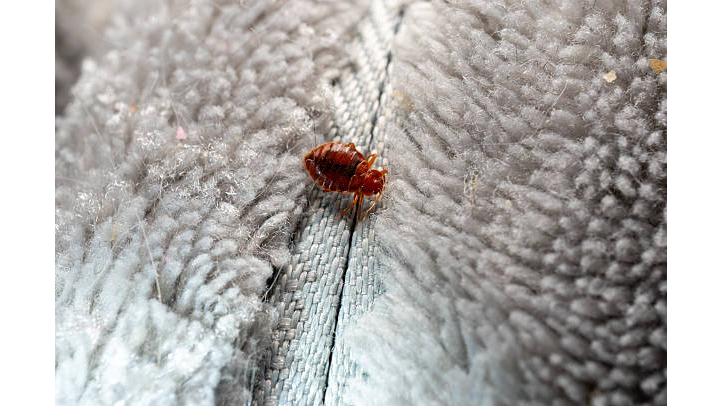
Key Takeaways
- Studies show 88% to over 90% of bed bug populations carry genetic mutations that make common insecticides largely ineffective against them.
- Bed bugs use two distinct biological mechanisms – target-site resistance and metabolic resistance – to neutralize chemical treatments before they can work.
- This resistance traces back to the widespread use of DDT after World War II, which unknowingly bred today’s chemically armored bed bug population.
- Heat treatment at or above 118°F kills bed bugs at every life stage, with eggs typically requiring temperatures closer to 120°F – all life stages that chemicals repeatedly fail to eliminate.
- If treatments in your home keep failing, the bugs themselves may be the reason – not the applicator.
Most people assume a failed bed bug treatment means something went wrong during the process. The technician missed a spot, the spray wasn’t strong enough, or the infestation was just too large. But increasingly, the real reason treatments fail has nothing to do with technique – the answer is written into the bed bug’s DNA.
Over 90% of Bed Bugs Now Carry Pyrethroid-Resistance Mutations
Pyrethroids are the most widely used class of insecticides in residential pest control. They appear in sprays, dusts, and many over-the-counter products. For most insects, they’re highly effective. For bed bugs, they’ve become nearly useless.
A 2025 study co-authored by Warren Booth and Cari Lewis, drawing on bed bug populations sampled across multiple regions over several years, found that over 90% of sampled populations carry at least one knockdown resistance (kdr) mutation. An earlier 2019 study focused on the South Central United States found that approximately 77% of bed bugs carried two specific kdr mutations – V419L and L925I – simultaneously. Broader population studies have placed the rate of target-site mutations between 88% and 90.6% across sampled populations. That’s not a fringe edge case. That’s nearly every bed bug in a typical infestation.
For homeowners who’ve tried repeated treatments without success, this is usually why. Professionals like Connor’s Pest Pros regularly encounter infestations where standard chemical approaches have already been attempted – sometimes multiple times – before a resistant population is finally identified as the root issue.
The Mutation That Breaks Chemical Treatments
Understanding how the mutation works helps explain why this problem is so stubborn.
Sodium Channel Mutations
Pyrethroid insecticides are designed to attack the nervous system. Specifically, they bind to sodium channels – tiny protein structures on nerve cells that control electrical signals. When pyrethroids latch onto these channels, they cause continuous nerve firing, which paralyzes and kills the insect.
In resistant bed bugs, genetic mutations have altered the shape of those sodium channels. The insecticide arrives, but it can’t bind properly. The connection simply doesn’t happen. The bug doesn’t get paralyzed. It walks away.
How Resistance Is Passed to Offspring
Once a bed bug carries this mutation, it passes it on. A single resistant female can lay hundreds of eggs over her lifetime, and offspring inherit a higher proportion of resistance mutations with each generation. Even a partially successful chemical treatment – one that kills the non-resistant bugs – can unintentionally select for the most resistant individuals to survive and reproduce. Over generations, the entire population becomes harder and harder to kill.
DDT Created Today’s Resistant Bed Bugs
This resistance didn’t appear overnight. After World War II, DDT became the go-to pest control solution across the United States. Used heavily in homes, hotels, and military barracks, it killed the vast majority of bed bugs it contacted. But a small number carried genetic variants that allowed them to survive, and those survivors reproduced.
What makes this particularly relevant today is that DDT resistance in bed bugs cross-applies to modern pyrethroid insecticides. Both DDT and pyrethroids target the same sodium channels in the nervous system. The mutations that helped bed bugs survive DDT in the 1950s are functionally the same mutations that protect them from pyrethroids now. Decades of chemical pest control inadvertently engineered the resistant bed bug population that professionals are dealing with today.
Two Ways Bed Bugs Neutralize Insecticides
Sodium channel mutations aren’t the only defense bed bugs have developed. There are two distinct resistance mechanisms at work.
Target-Site Resistance (kdr Mutations)
The sodium channel mutation described above is formally known as knockdown resistance, or kdr. The insecticide reaches its intended target – the nervous system – but the target has been structurally altered so the chemical can’t do its job. This is the most well-documented form of insecticide resistance in bed bugs and the primary reason pyrethroids fail.
Metabolic Resistance
Some bed bug populations go even further. Through metabolic resistance, bed bugs produce elevated levels of enzymes that chemically break down insecticides before they can even reach the nervous system. The pesticide is neutralized before it arrives. Research has also found that some populations are developing resistance to neonicotinoids – a class of insecticides once considered a viable alternative to pyrethroids – through similar enzymatic mechanisms. This multi-front resistance is part of why developing reliable new chemical treatments has proven so difficult.
Why Bed Bugs Keep Surviving Treatments
Genetic resistance is the core problem, but two behavioral traits make it much worse.
Expert Hiders in Tiny Spaces
Bed bugs are flat-bodied insects – roughly the thickness of a credit card when unfed. That shape lets them squeeze into spaces that are nearly impossible to treat: inside electrical outlets, underneath wallpaper edges, within mattress seams, along baseboards, inside box springs, and deep in furniture joints. Even a thorough chemical treatment can leave bugs hiding just a few millimeters out of reach, where they survive, wait out the treatment, and repopulate.
Months Without Feeding
Bed bugs can survive for up to a year without a blood meal by entering a low-metabolism dormant state. A seemingly successful treatment – one where bite activity stops for weeks – can be followed by a resurgence as dormant survivors begin feeding again. Combined with resistance mutations, this patience makes bed bugs extraordinarily difficult to eradicate through chemicals alone.
Heat Works Where Chemicals Fail
Given how thoroughly bed bugs have adapted to chemical treatments, the question becomes: what actually works?
Lethal Temperatures Kill All Life Stages
Heat is not something bed bugs can genetically adapt to. There is no mutation that allows a cell to survive protein denaturation at lethal temperatures. Professional heat treatment raises room temperatures to 118°F or above, with eggs typically requiring temperatures closer to 120°F to ensure full mortality across all life stages. At those temperatures, heat disrupts cellular function at a fundamental level. Death is certain.
Specialized equipment raises the temperature throughout an entire room or unit – penetrating into furniture, mattresses, wall voids, and the tight crevices where bed bugs hide. Heat moves through the entire space uniformly, reaching areas that chemical sprays simply cannot access. Adults, nymphs, and eggs are all affected. Eggs are notoriously resistant to chemical treatments, making heat particularly critical for breaking the reproductive cycle.
Widespread insecticide resistance in bed bugs has driven the development of integrated pest management (IPM) strategies – including non-chemical methods like heat – as a necessary component of effective control. Case studies from pest control companies consistently show heat succeeding in situations where repeated chemical applications had already failed.
Stop Guessing – Call A Pro
Failed bed bug treatments are demoralizing. Bites return. Sleep suffers. Confidence in any solution erodes. When the cause is genetic resistance rather than applicator error, the right response is a different type of treatment – not simply more of the same chemical approach.
Heat treatment requires industrial-grade equipment, professional temperature calibration, and trained technicians. Improper application creates serious fire hazards. This is work that demands verified results, not guesswork.
If standard chemical treatments haven’t resolved a bed bug infestation, pursuing a heat-based solution with professionals who understand the biology behind the failure – not just the logistics of spraying – is the logical next step.
Connor’s Pest Pros
5410 Port Royal Rd
Springfield
VA
22151
United States


