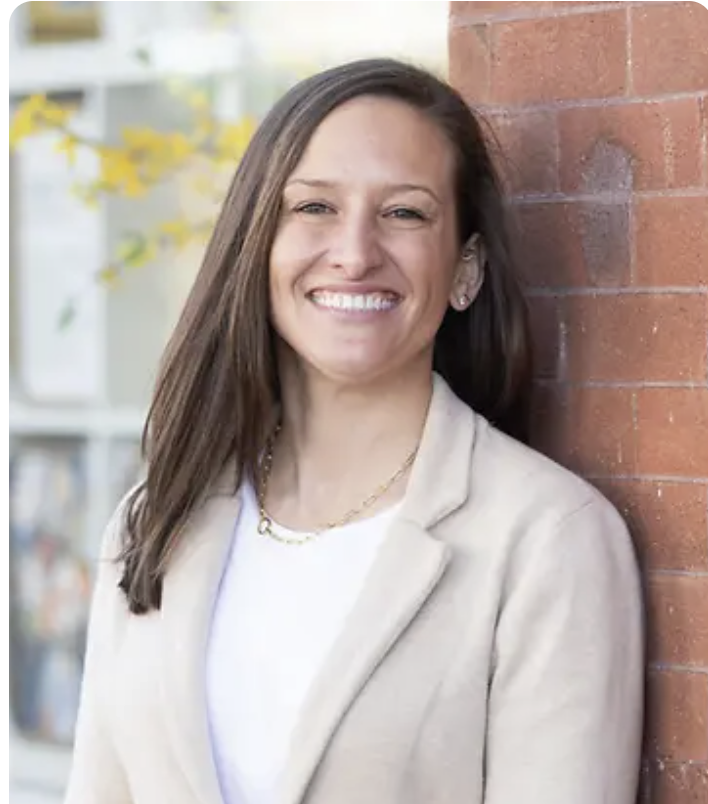
NY, UNITED STATES, August 20, 2026 /EINPresswire.com/ — Combining Lived Experience, Clinical Expertise, and Executive Leadership to Advance Person-Centered Addiction Treatment and Expand Access to Care
Sayville, New York — Christina M. McMahon’s career in behavioral healthcare began not with a carefully mapped-out plan, but with a second chance.
She has experienced addiction and recovery personally. She has sat across from patients and families as a counselor. And today, as Regional Vice President at Victory Recovery Partners, she helps lead the clinical operations, program development, and strategic growth of multiple outpatient addiction treatment centers.
That combination of lived experience, clinical expertise, and executive leadership has shaped not only Christina’s career, but the kind of leader she has chosen to become.
At the center of it all is a simple belief: people deserve treatment that sees them as people first.
An Unconventional Path to Behavioral Healthcare
Christina’s path into behavioral healthcare was anything but traditional.
She began her professional career as a special education teacher and coach, experiences that taught her some of the principles she would later carry into behavioral healthcare: advocacy, individualized support, and the importance of meeting people where they are rather than expecting everyone to fit into the same mold.
Then her life took a very different direction.
Following her own journey through addiction and recovery, Christina’s sense of purpose shifted. She returned to school, completed formal training as a Credentialed Alcoholism and Substance Abuse Counselor (CASAC), and entered the addiction treatment field in 2018.
This time, the work was deeply personal.
Christina began her clinical career at Seafield Center as a primary counselor, doing psychosocial assessments and then working directly with individuals who were recently released from incarceration. Sitting with people during some of the most vulnerable moments of their lives gave her an understanding of addiction treatment that could never come from a textbook or boardroom alone.
She later joined Victory Recovery Partners, where she advanced through increasingly senior leadership positions — from Program Supervisor to Executive Director, Senior Executive Director, and ultimately Regional Vice President.
With each role, her perspective widened.
She came to understand behavioral healthcare from the individual relationship between counselor and patient all the way to the operational and strategic decisions required to build and lead effective treatment systems.
Today, Christina provides executive leadership across clinical and operational functions, working closely with facility leaders to navigate complex decisions, strengthen clinical performance, develop teams, expand services, and build programs that respond to the needs of the communities they serve.
But no matter how far she has advanced professionally, she has never forgotten what it feels like to be the person who needs help.
Building Systems Around People
Christina’s leadership philosophy is rooted in person-centered care and the belief that clinical excellence should never come at the expense of dignity, autonomy, compassion, or respect.
To her, successful behavioral healthcare is about far more than creating programs, meeting metrics, or managing operations.
It is about building systems in which people feel seen, supported, and respected while receiving the care they need.
A significant focus of Christina’s work has been expanding access to treatment and developing new services across the continuum of addiction care. Among her most meaningful accomplishments has been spearheading the development and expansion of Victory’s adolescent substance use disorder programming, helping create greater access to developmentally appropriate treatment for young people and their families.
She has also led strategic initiatives focused on strengthening continuity of care, expanding treatment services, developing community partnerships, and improving the way patients enter and experience the behavioral healthcare system.
Underlying those efforts is an understanding that treatment does not exist in isolation.
Sustainable recovery requires collaboration among providers, families, communities, and — most importantly — the individuals receiving care.
Remembering the People Who Took a Chance on Her
Christina attributes much of her success to an unwavering work ethic and the privilege of doing work she cares deeply about, both personally and professionally.
But she is equally clear about something else:
She did not get here alone.
During one of the most difficult periods of her life, while struggling with addiction and beginning to rebuild in recovery, people extended kindness, grace, and opportunity to Christina when she needed those things most.
They believed in who she could become at a time when she was still learning to believe in that person herself.
Their willingness to see beyond where she had been helped give Christina the opportunity to build the life and career she has today.
She has never forgotten what it feels like to have someone take a chance on you.
That experience continues to shape the way she leads, connects with others, and approaches behavioral healthcare. It reminds her to look beyond where someone is standing today and recognize where they may be capable of going when they are given support, opportunity, and someone willing to believe in them.
In many ways, the passion Christina brings to her work comes from a desire to extend to others some of what was once so generously extended to her.
Choosing Work That Means Something
One of the most meaningful pieces of career advice Christina ever received came during a conversation with one of her mentors, Sally McGarrity.
They were talking about the emotional weight of working in behavioral health and addiction treatment.
The work can be extraordinarily rewarding. It can also be extraordinarily difficult.
There is pain. There is loss. There are setbacks. And there are outcomes that even the most dedicated professionals desperately wish could have been different.
During that conversation, Sally shared something Christina has never forgotten: if she could go back and choose a different life or career, she wouldn’t.
The sentiment stayed with Christina because it captured something she had been learning herself:
Meaningful work is not always easy work. Sometimes, the work that asks the most of us is also the work that gives the most back.
Christina has carried that perspective with her ever since.
Difficult days do not diminish the value of meaningful work. Sometimes, they are precisely what remind us how much the work matters.
For Christina, fulfillment has never come from finding the easiest path.
It has come from knowing that the path she chose means something.
Her Advice to Women: Work Hard — But Don’t Lose Yourself
As a leader and mentor, Christina encourages young women entering behavioral healthcare to work hard, be ambitious, and take opportunities that scare them a little.
But she also offers an important caution:
Do not lose yourself in the pursuit of becoming successful.
Helping professions can create a dangerous misconception that giving more, working longer, and constantly pushing beyond personal limits are proof of commitment.
Christina has learned that they are not.
Taking care of yourself is not separate from success. It is part of what makes success sustainable.
She also encourages women to trust their internal compass.
There is often a quiet voice that knows when something is right, when something isn’t, and when it may be time to take a chance or make a change. That voice can easily be drowned out by other people’s expectations, opinions, fear, or self-doubt.
Some of the most important periods of growth in Christina’s life and career began when she trusted that instinct before she could see exactly where it would lead.
You do not always need the entire path mapped out.
Sometimes, you simply need to trust yourself enough to take the next step.
The Challenge — and Opportunity — Facing Behavioral Healthcare
Christina recognizes that behavioral healthcare continues to face enormous challenges.
For those working within the field, one is the emotional weight of the work itself. Addiction and mental health conditions can involve tremendous suffering, and even when professionals care deeply and work tirelessly, not every outcome is the one they hoped for.
On a systemic level, one of the greatest challenges remains access.
Insurance coverage, socioeconomic circumstances, geography, and other barriers continue to influence who receives treatment, when they receive it, and the quality and range of services available to them.
Too many people struggling with addiction or mental health challenges still encounter barriers to timely, high-quality care — barriers that can have life-altering consequences.
Yet Christina also sees tremendous reason for hope.
Conversations surrounding addiction and mental health are becoming more open. Stigma is slowly decreasing. More people are recognizing these conditions for what they are: health issues deserving of compassion, evidence-based treatment, and long-term support.
Christina believes behavioral healthcare now has an opportunity — and a responsibility — to keep moving toward a system in which a person’s background, finances, insurance coverage, or ZIP code do not determine whether they have access to dignity, quality treatment, and a genuine chance at recovery.
Leading Without Leaving Humanity at the Door
At the center of Christina’s professional and personal life are authenticity, empathy, kindness, and a willingness to advocate for others.
Authenticity is particularly important to her.
Christina believes the strongest connections happen when people feel safe enough to be fully themselves. She tries to create that environment by showing up as her genuine self, whether she is sitting with a patient, mentoring a colleague, or leading an organization.
She does not believe leadership requires someone to leave their humanity at the door.
Empathy is equally central to how she approaches people.
Christina tries to lead with curiosity rather than judgment, recognizing that we rarely know the full story of what another person is carrying.
She believes in giving people grace, leading with kindness, and extending the same understanding she would hope someone would offer her during her own most difficult moments.
She also feels a deep responsibility to advocate for people who may be vulnerable, overlooked, or struggling to have their voices heard.
To Christina, integrity is not simply about having strong values when they are convenient.
It is about being willing to act on those values when it matters.
A Life Beyond What Once Seemed Possible
At the heart of Christina’s work remains the same belief that brought her into the field in the first place:
Recovery is possible.
But to Christina, recovery means far more than simply moving away from addiction.
It is the opportunity to build a life that may once have seemed unimaginable.
Her own career reflects that possibility — from experiencing addiction herself, to becoming a counselor helping others navigate it, to now helping shape the systems responsible for delivering treatment.
Through her leadership, Christina continues working to build behavioral healthcare systems that are accessible, collaborative, clinically strong, and grounded in dignity.
Ultimately, however, the legacy she hopes to leave is much simpler.
Christina wants people to walk away from an interaction with her feeling respected, understood, and valued.
Titles matter. Accomplishments matter. Careers matter.
But she believes how we make people feel — and how we show up for them when they need us most — says far more about who we are.
For Christina McMahon, that may be the most important measure of success of all.
Learn More about Christina M. McMahon:
Through her Influential Women profile, https://influentialwomen.com/connect/christina-mcmahon
Influential Women
Influential Women provides a platform where women from all backgrounds can connect, share their perspectives, and create content that empowers themselves and others. Through storytelling, thought leadership, and creative expression, Influential Women amplifies voices that inspire change.
Editorial Team
Influential Women
email us here
Legal Disclaimer:
EIN Presswire provides this news content “as is” without warranty of any kind. We do not accept any responsibility or liability
for the accuracy, content, images, videos, licenses, completeness, legality, or reliability of the information contained in this
article. If you have any complaints or copyright issues related to this article, kindly contact the author above.

Media gallery